
Ski
01.10.2026
The best beginner areas in Serre Chevalier
Le Monêtier-les-Bains offers an ideal setting for discovering skiing in Serre Chevalier. Its snow front makes those first few runs...
Read more
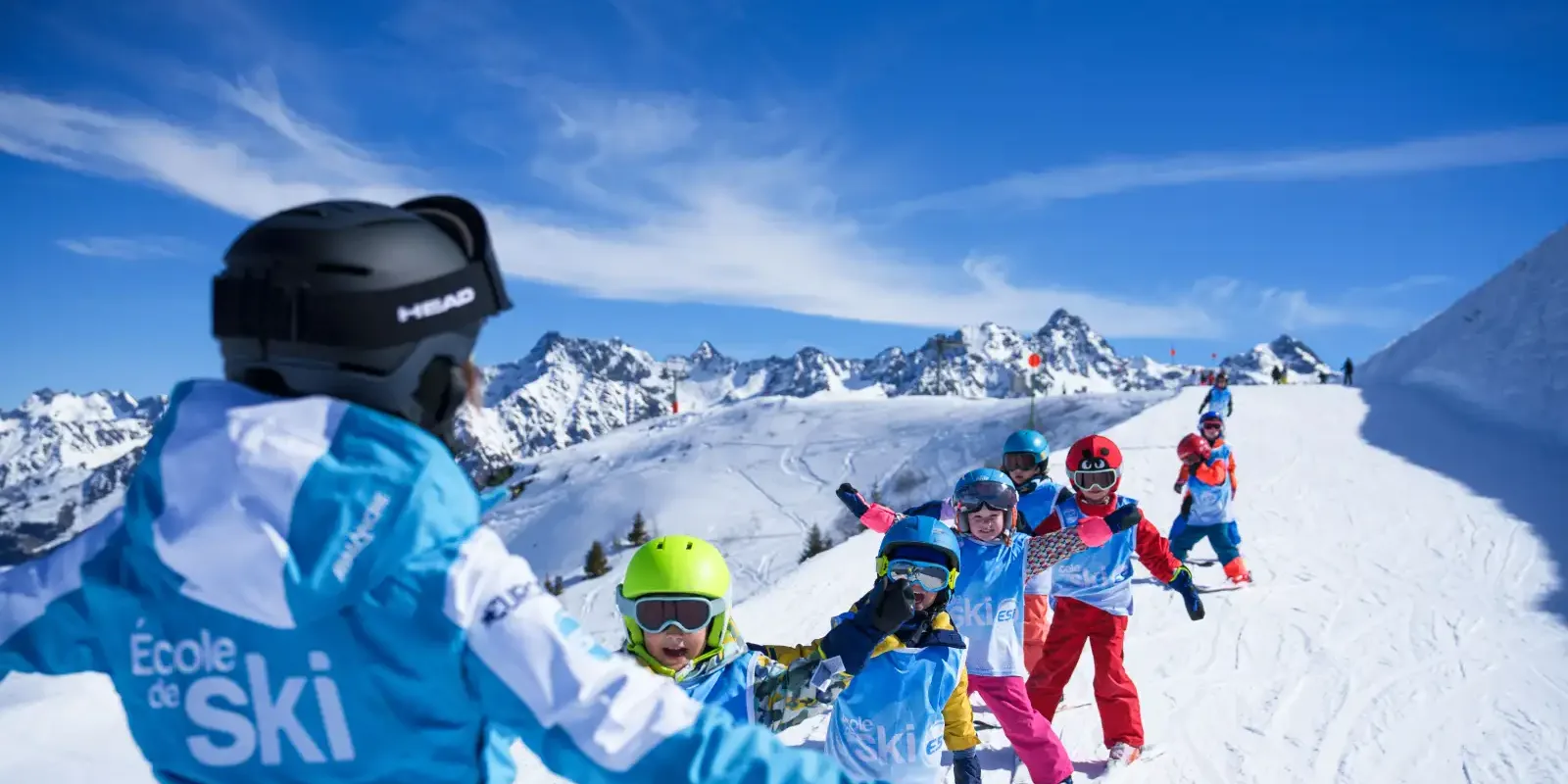
Learning to ski requires time, confidence, and a suitable approach. Every child progresses differently depending on their age and experience.
Guidance from an instructor often helps children make faster progress in skiing. Instructors provide specific advice and structure the learning process progressively.
However, making rapid progress does not mean skipping steps. The primary goal is to build a solid, lasting foundation.
A certified instructor understands the various stages of learning to ski. They offer exercises tailored to each child’s abilities.
First, they observe the child’s posture, balance, and coordination. Then, they select the appropriate exercises to address any difficulties.
This method prevents the reinforcement of bad habits and allows the child to gradually understand their movements.
At ESi Monêtier, instructors tailor their guidance to each young skier’s level, ensuring every session meets specific objectives.
Children do not learn the same way adults do. They need simple instructions, short exercises, and achievable goals.
The instructor therefore turns learning into games and challenges, allowing children to develop their technique without feeling undue pressure.
For instance, a fun obstacle course can teach them how to turn or control their speed, with each exercise targeting a specific skill.
Furthermore, the instructor uses language suited to the participants’ age, ensuring children understand instructions better and apply them more easily.
Structured exercises for faster progress
While free skiing helps build experience, it is not always enough to correct specific technical issues.
Instructors structure each lesson around a logical progression, checking existing skills before introducing a new exercise.
Children first learn to maintain their balance, then work on braking, turning, and controlling their trajectory.
Finally, they explore a wider variety of slopes as their ability improves. This structured approach fosters steady progress.
Every child faces different challenges. Some lack balance, while others are afraid of speed or slopes.
The instructor quickly identifies the root cause of the hesitation. They can then offer a simple, immediately applicable correction.
Moreover, the advice given is practical. The child knows exactly which movement to adjust during the next run.
This immediate correction helps prevent bad habits from forming. It also allows the young skier to quickly sense their own progress.
Fear can hinder a child’s progress. It often arises when facing a steep slope, unusual speeds, or the prospect of falling.
The instructor creates a reassuring environment and selects suitable terrain. They encourage the child without imposing overly difficult challenges.
As a result, the young skier feels more confident about trying new exercises. Each success further boosts their confidence.
This confidence also improves their posture. A relaxed child has better control over their skis and reacts more effectively.
Group lessons offer an important social dimension. Children learn alongside peers who are at a similar skill level.
They observe one another, share their successes, and tackle various challenges together. This dynamic keeps their motivation high.
What’s more, exercises are often more fun in a group setting, turning the learning process into a shared adventure.
At ESi Monêtier, groups are kept small, allowing the instructor to give each child individual attention.
The choice of terrain directly impacts progress. A slope that is too difficult can trigger fear or cause the child to react poorly.
Conversely, a slope that is too easy may limit opportunities for improvement. The instructor therefore seeks the right balance.
Drawing on their knowledge of Monêtier-les-Bains, they select areas suited to the group’s level, while also taking current conditions into account.
Children might start near the Pré Chabert snow front before gradually exploring other slopes across the Serre Chevalier resort.
Technical progress is only one part of learning to ski. A child also needs to understand the essential rules of the slopes.
The instructor teaches them how to control their speed and respect other skiers. They also explain where to stop without creating a hazard.
In addition, the child learns to observe their surroundings, developing good reflexes right from their very first runs.
This awareness fosters greater independence. It also gives parents greater peace of mind when letting their child ski.
Parents can share tips and support their child, but knowing how to ski doesn’t always mean knowing how to teach.
A parent might use overly complex explanations or lack a structured teaching approach. Family dynamics can also lead to some tension.
With an instructor, children often adopt a different attitude; they listen to instructions and gradually become more independent.
Parents can then meet up with their child to ski together, making the most of those shared moments.
Group classes are ideal for children who enjoy being part of a group. They foster healthy competition, sharing, and consistency.
Private lessons offer fully personalized instruction. They are perfect for working on specific challenges or rebuilding confidence.
The choice depends on the child’s personality, skill level, and goals. The length of the trip can also influence the decision.
In either case, consistent instruction improves results. Multiple sessions help consolidate skills between new stages of learning.
There is no set timeframe that applies to every child; age, motor skills, and confidence levels directly influence the learning process.
Lesson frequency also plays a key role. Regular practice helps the child commit movements to muscle memory.
However, the quality of progress matters more than the speed at which it happens. A solid foundation makes each subsequent stage easier.
The instructor assesses the child’s skills throughout the sessions and adjusts the program based on actual progress observed.
First, choose a lesson that matches their age and skill level. A group that isn’t the right fit can hinder their progress.
Next, ensure they have comfortable, properly adjusted equipment. Uncomfortable boots can quickly ruin a session.
Also, be sure to respect their need for rest. Fatigue reduces concentration and increases the risk of falling.
Finally, value their effort rather than their performance. This approach boosts their motivation and enjoyment of skiing.
ESi Monêtier guides young skiers across the Serre Chevalier ski area. Their certified instructors have expert knowledge of the local slopes.
They use a progressive, friendly teaching approach tailored to children. Each student advances according to their own level and needs.
Small group sizes also facilitate personalized guidance, allowing instructors to observe each child and adjust exercises accordingly.
In this way, young skiers develop their technique, independence, and confidence—while discovering the joy of skiing in the mountains.
Yes, guidance from an instructor generally leads to faster, more structured progress. Children benefit from a tailored teaching method and precise corrections.
They also learn to ski on terrain suited to their abilities. This progressive approach minimizes mental blocks and boosts confidence.
However, every child learns at their own pace. The best learning experience combines technique, safety, and fun.
With ESi Monêtier instructors, children discover skiing in a reassuring environment, building a solid foundation at Serre Chevalier.